Essay: The GM Is Dead
In Firebrands, The GM Is Dead.

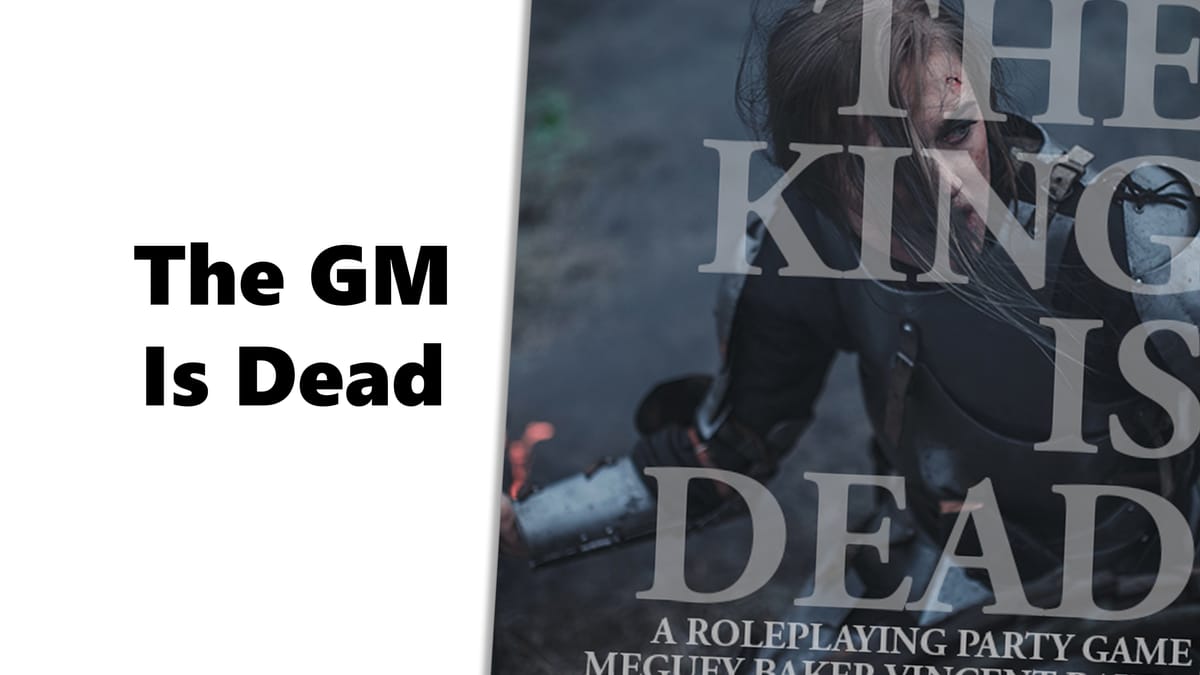
Asa Donald and Cornelia Foote.
This essay is about GMless games in the style of Firebrands. Asa has a Firebrands-style game in prelaunch on Kickstarter: Violent Delights: A chess-based RPG about Shakespeare’s Romeo & Juliet.
In Firebrands, The GM Is Dead.
Game Master is a slippery term. It’s one of those concepts that you can discuss all day and list numerous examples yet hesitate to pin down with any formal definition. It splinters into so many uses that the responsibilities and rules associated with the role vary greatly between design traditions, down to individual games within those traditions and the implications of what each game has named the role.
GMs may be masters of the fiction, the rules, the conversation, social organizing, legwork — “a miserable pile of secrets” as someone recently joked in the Dice Exploder discord. I focus on two of these areas for this article. Often, a GM is a player role that…
- “authors” the fictional parts that other players do not control, acting as the narrator and non-player characters, and
- assumes “authority” to interpret, relate, implement, or alter rules.
What they can author and how much authority they have varies between games.
I like the words “author” and “authority.” In some ways, the actual author(s) of a game surrenders their work when they are done with it, and they delegate their influence among the player roles. Whether players perform their charge in absence of the author is another issue. If they wanted, the author could have simply written their world and limited the players’ power as readers, observers. Is that what novelists do? Instead, the author of a tabletop RPG says, “I have created a seed of a world, and I am inviting you to assume certain roles in growing its fiction and upholding its rules.”
In roleplaying-games, most players have power over their characters’ choices, at minimum. A GM is a role that tends to be delegated the most power. But that isn’t always the case. A common refrain is that some “GMless” games might also be termed “GMful,” which is to say that in lieu of one player with more power than the others, that power is distributed among the players or among roles that the players can temporarily assume. Typically, that power is to author fictional parts that the other players do not control, like setting elements, and players assume a greater shared responsibility in interpreting and relating the rules.
This authority or masterdom is often depicted as an authority of the state. A common symbol for GMless games is a crown that has been crossed out: No king in this game. The author presents you with a fictional world. In lieu of a king or master, you might belong to an anarchist society — "No gods, no masters." Or maybe a council whose members govern their separate domains of the world.
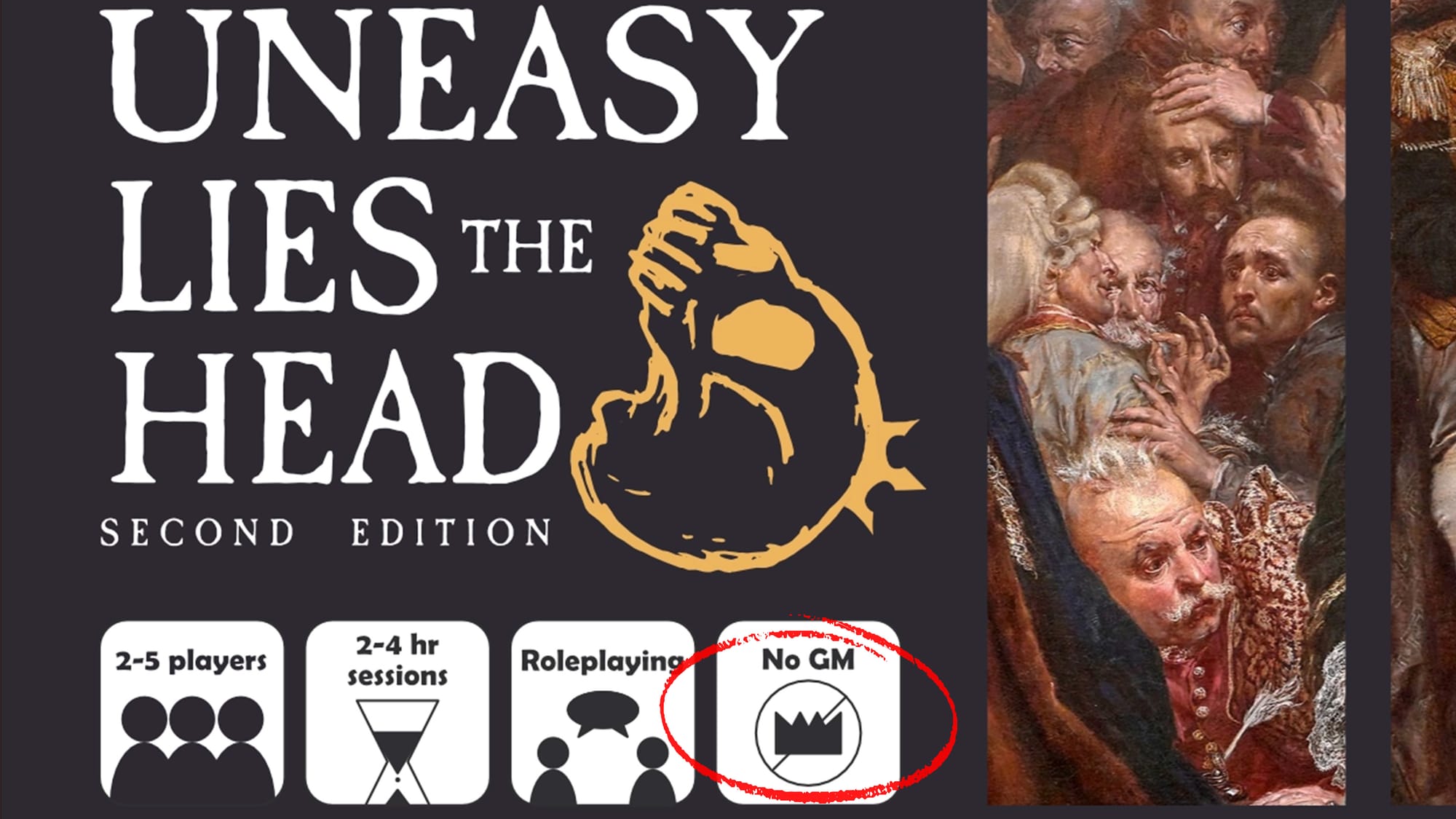
Firebrands and The King is Dead
The Firebrands framework is an exception. Games built on this framework have no GM. Instead, players take turns choosing mini-games. Each mini-game provides a scenario with instructions for setup, the procedure for conducting the scenario, and conditions for ending the scenario. As Kodi Gonzaga suggested in a recent Dice Exploder episode, it may be “one of the few true GMless TTRPG systems.” The players have power but not as much as in other GMless games. Much of the authority in these games has been bestowed to the game text.
To me, this framework is most comparable to solo RPGs, whose players are more reliant on the game text. In many group-oriented games, the game text is a “rulebook,” a reference object that is hypothetically dispensable under the GM’s authority. For solo RPGs, I think of the game text as more of a gamebook. It has an essential role in facilitating play, according to its prompts and oracles. Can the game text be a GM? No, but it certainly assumes some GM roles in its facilitation and tools for authoring fiction.
Players have a different relationship to the game text in the Firebrands framework than in many other group-oriented games. With limited authority of their own, they rely on the text for structure and organizing their interactions. As with solo RPGs, certain parts of the text can feel (but are never really) inviolable. At the very least, you are less likely to treat its rules as unimportant, more likely to treat the text as “authoritative.” Even so, I admit these games still function best when the game text falls out of focus during a mini-game, with the caveat that I believe this often can be the case with a GM too — when players start interacting with each other and relying less on the GM’s direction.
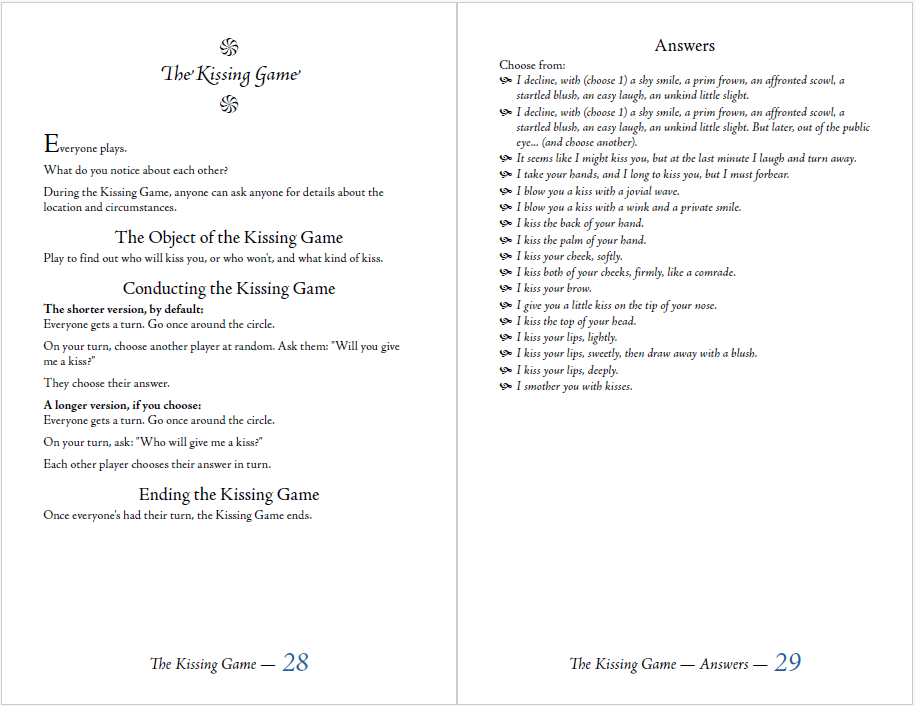
Firebrands-style games are GMless. But in the same way that it can be useful to think of GMless games like Dream Askew as GMful, maybe there is a useful way to think about the distribution of the GM’s authority in Firebrands or similar games.
Maybe “the author” or their authorial character is the GM. I like that, because the central authority is absent. "The King Is Dead," the Bakers declare in the title of my favorite Firebrands game. And although they surrendered most of their authority over the world to players, they didn’t surrender all of their power. They invested much of it into the book, instead. The players could disregard the game text and its structures, yet the players accept their governance. The king lingers in them, like a ghost who haunts the text.
In the Firebrands framework, the GM is dead.